Blog
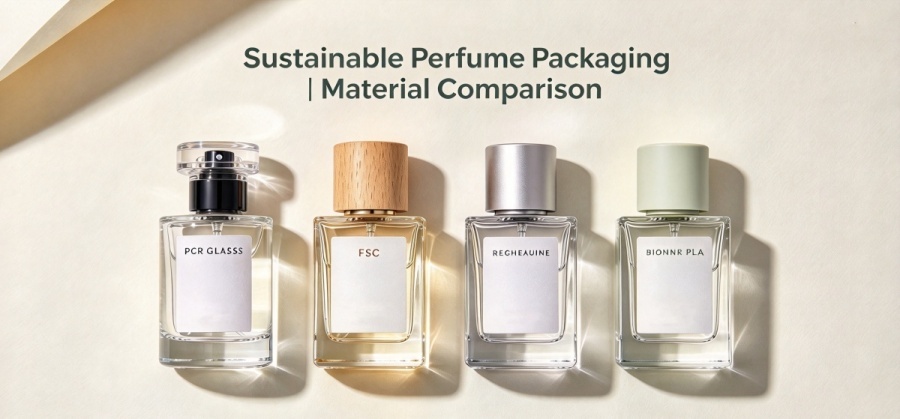
Sustainable Perfume Packaging Materials Comparison: PCR Glass, Recycled Aluminium, FSC Wood & Bioplastics
Sustainable Perfume Packaging Materials Comparison: PCR Glass, FSC Wood, Aluminum & Bioplastics
As consumer demand for eco‑friendly beauty and fragrance products keeps rising, perfume brands face a common challenge: selecting sustainable packaging that balances aesthetics, regulatory compliance, supply stability, and true circularity. Many material options are marketed as “green”, yet not all fit luxury perfume requirements or meet EU and global recycling standards.
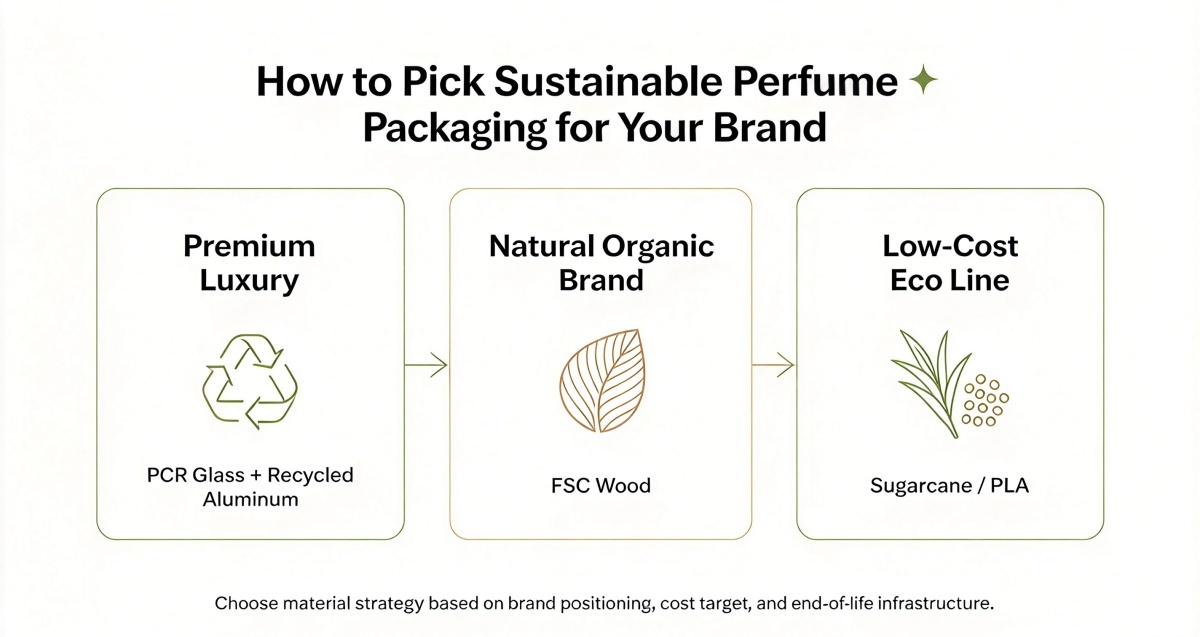
This guide breaks down four widely used sustainable perfume packaging materials. It is written for fragrance brand owners, product developers, packaging buyers, and sustainability teams.
Custom Luxury Perfume Bottle Packaging
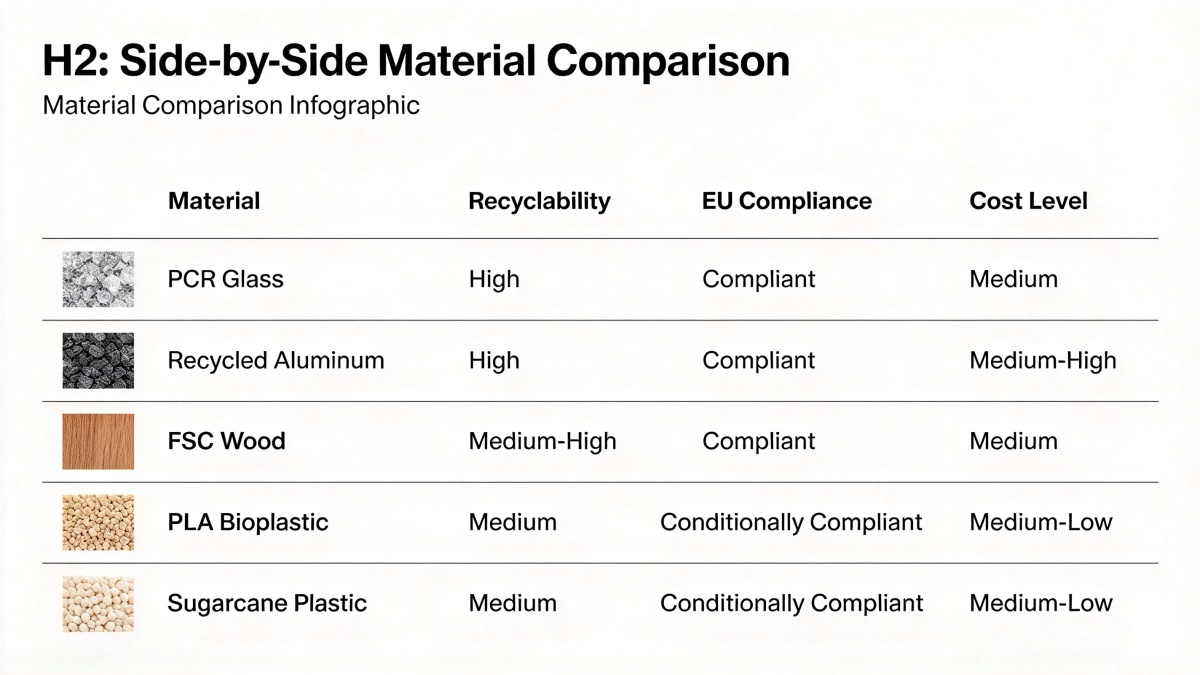
Side‑by‑Side Material Comparison
| Material | Recyclability | EU Compliance Notes | Key Advantages | Main Limitations | Relative Cost | Best For |
|---|---|---|---|---|---|---|
| PCR Glass (Post‑Consumer Recycled Glass) | 100% infinitely recyclable; no quality loss with proper sorting | Compliant with EU Packaging and Packaging Waste Regulation (PPWR); recycled content declarations need verification | Premium transparent look, chemical inert, compatible with all perfume oils, great luxury feel | Color limitation, batch‑to‑batch minor color variation, higher carbon footprint than aluminum | Medium | Eau de parfum, luxury perfume main bottles |
| FSC‑Certified Wood | Recyclable, biodegradable if uncoated; FSC chain of custody required | FSC certification accepted under EU Deforestation‑free Products Regulation (EU DFR) | Warm natural texture, excellent for caps, strong branding differentiation | Water sensitivity, risk of fragrance oil stain, coating may reduce recyclability | Medium‑High | Perfume caps, decorative outer boxes |
| Recycled Aluminum | 100% infinitely recyclable, low energy for reprocessing | Fully aligned with PPWR; easy recycling stream separation | Lightweight, metallic premium finish, durable, oil resistant | High raw material volatility, dents easily, limited transparent effect | High | Spray collars, caps, decorative fittings |
| Certified Bioplastic (PLA / PHA) | Industrial compostable only; rarely accepted in household recycling | Must carry EN 13432 certification; many bioplastics are contaminated in recycling streams | Lightweight, moldable into unique shapes | Poor heat resistance, not compatible with long‑term perfume storage, high greenwashing risk | Medium | Secondary packaging, sample containers |
Deep Dive Into Each Material
PCR Glass
PCR glass remains the gold standard for luxury perfume bottles. Unlike plastic, glass does not interact with essential oils or alcohol formulations, which protects perfume scent stability over shelf life.
Recycled glass reduces raw mineral extraction. According to EUROSTAT recycling data, European glass recycling rates have stayed above 70% for years.
Important note: Not all “PCR glass” has verified recycled content. Always ask suppliers for third‑party test reports instead of self‑declared claims to avoid greenwashing.
FSC Wood
FSC wood is a top pick for perfume caps. It delivers organic, earthy branding that pairs well with natural, clean‑fragrance lines.
The critical risk point is coating. Varnish, lacquer or sealant blocks biodegradation and complicates recycling. Brands aiming for circular packaging should choose water‑based, low‑impact coatings.
Reference: FSC official website
Recycled Aluminum
Aluminum recycling saves over 95% of the energy needed to produce primary aluminum. It is a favorite for spray pumps, collars and metal caps in high‑end perfume lines.
One downside: aluminum is a commodity metal. Prices swing sharply with global energy and supply chain changes. It is rarely used as the main perfume bottle body.
Compostable Bioplastics
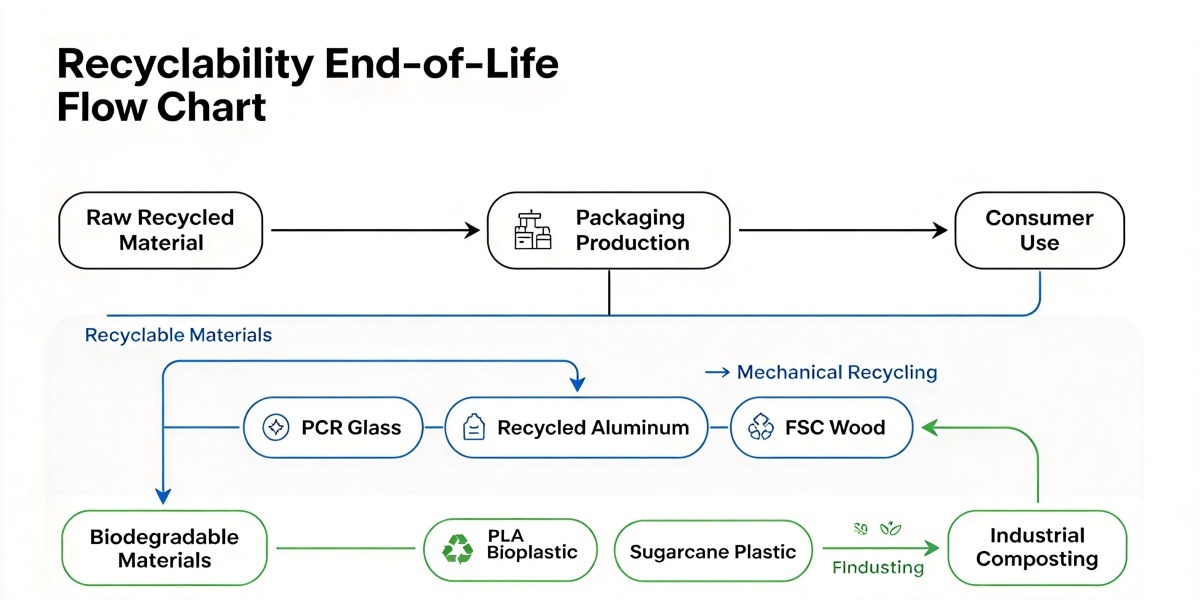
Bioplastics are often misunderstood. Most PLA bioplastics will not break down in home compost. They require industrial compost facilities with controlled temperature and humidity.
For perfume primary packaging, bioplastics are usually not recommended. Perfume contains ethanol, which can degrade bioplastic over time and alter fragrance.
How to Choose Without Greenwashing
Follow these simple decision rules before locking your packaging material:
- Separate primary packaging (direct contact with perfume) and secondary packaging (outer box, sleeve). Primary packaging prioritizes chemical stability first.
- Check which certifications you actually need: PPWR, FSC, EN13432, recycled content certificates.
- Confirm local recycling infrastructure in your target market. A material that is technically recyclable is useless if your customer’s city has no collection stream.
- Avoid vague marketing words like “eco‑friendly”, “natural” or “zero‑waste” without supporting documents.
Common Pitfalls for Fragrance Brands
- Assuming biodegradable = recyclable
- Mixing different material layers (glass + glued wood + plastic liner) which makes the whole pack hard to separate for recycling
- Buying FSC wood without valid chain‑of‑custody documentation
- Using bioplastic for perfume bottles and facing scent leakage or deformation complaints
Final Takeaway
For most luxury perfume brands targeting EU markets, PCR glass for bottles paired with FSC wood caps or recycled aluminum components offers the most balanced sustainable solution. Bioplastics work best for limited‑edition samples or outer promotional packaging.
Sustainable packaging is not about picking the “trendiest” material. It is about matching material performance, certification evidence, and end‑of‑life treatment to your brand’s sales regions.
Author: YOULIKE Packaging Team
Published: October 2026
0users like this.